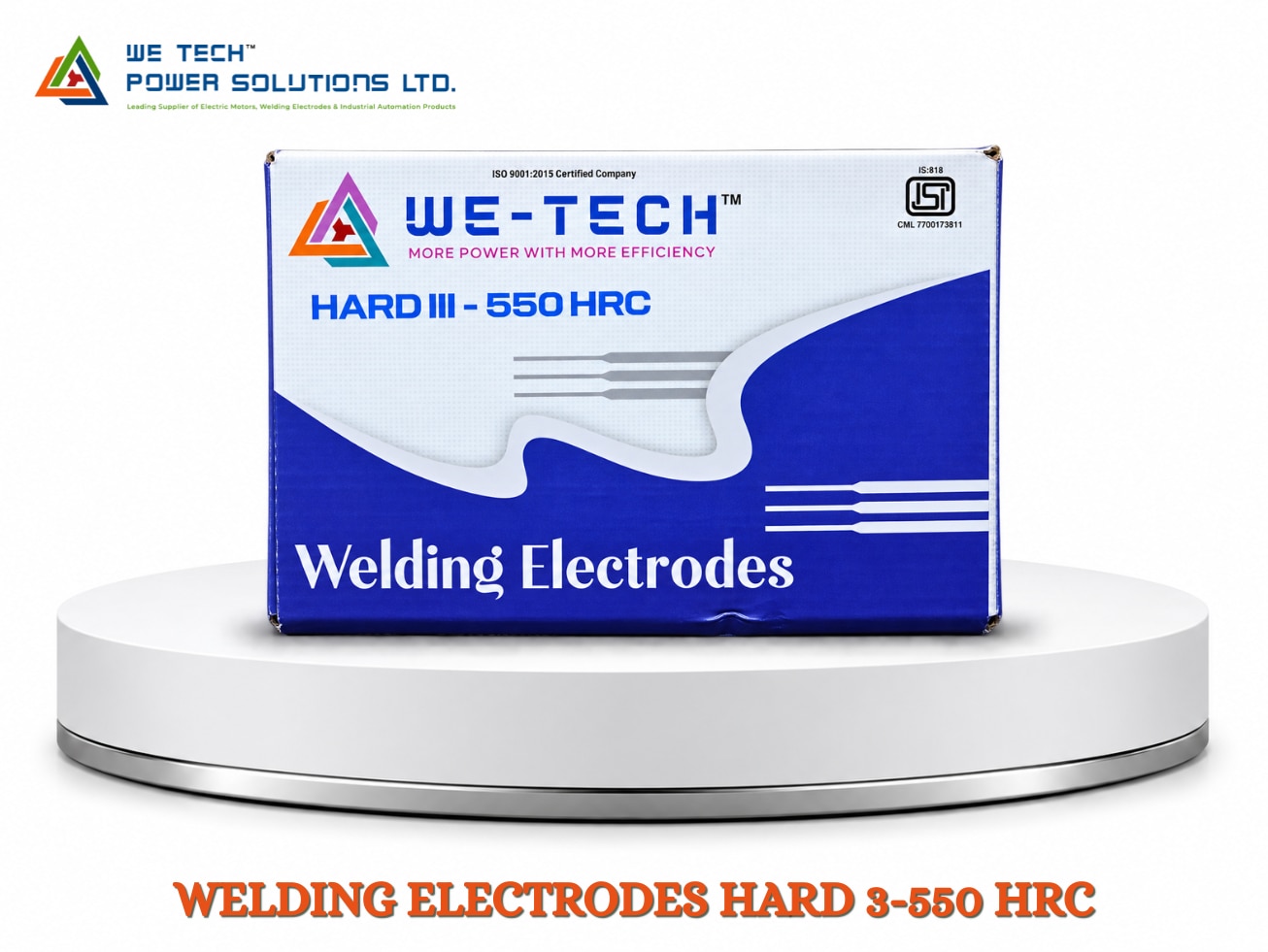
WELDING ELECTRODES HARD 3-550 HRC
Description
Welding Electrodes Hard 3-550 HRC Exporter from India.
We Tech Power Solutions Ltd, offer Welding Electrodes Hard 3-550 HRC Trader in Ahmedabad for industrial hardfacing applications where components face high abrasion, friction, and moderate impact. This hardfacing electrode builds a wear-resistant surface on suitable components and helps extend their service life in demanding working conditions.
Technical Specifications
• Product Type: Hardfacing Electrode
• Coating Type: Rutile
• Primary Resistance: High abrasion and moderate impact
• Machinability: Non-machinable
• Spalling Resistance: Yes
• Crack Resistance: Yes
• Friction Resistance: Suitable for high-stress applications
• Condition: As-welded
• Hardness (3 Layers): 540–580 BHN
• Identification: Name printed
Hardfacing Electrode for Abrasion Resistance
As a welding electrode hard 3-550 HRC Supplier in Gujarat, We Tech Power Solutions Ltd provides a rutile-coated hardfacing electrode designed to resist high abrasion and moderate impact. The deposited layer is intended for applications where equipment surfaces experience continuous wear, friction, and high-stress abrasion.
Key Characteristics of Hard 550 Electrodes
The Welding Electrodes Hard 3-550 HRC Exporter from India range features a rutile coating and is classified as a non-machinable hardfacing electrode. The deposited weld metal resists spalling and cracking, along with high-stress abrasion and friction. The electrode identification is printed on the product for easier identification during welding and maintenance work.
Product Features
• Rutile-coated hardfacing electrode
• Designed for high abrasion resistance
• Suitable for moderate impact conditions
• Non-machinable deposited metal
• Resistant to spalling
• Resistant to cracking
• Suitable for high-stress abrasion and friction
• Product name printed on the electrode
Industrial Applications
For customers seeking Welding Electrodes Hard 3-550 HRC Dealer in Saudi Arabia, these electrodes can be considered for components that undergo substantial wear during operation. Typical applications include excavator teeth, shear blades, disintegrator hammers, bucket lips, and metal cutting and forming tools.
Common Applications
• Excavator teeth: Hardfacing can help protect working edges exposed to abrasive material.
• Shear blades: Suitable for selected wear-prone blade applications.
• Disintegrator hammers: Useful where repeated abrasion and impact are involved.
• Bucket lips: Applicable for heavy-duty earthmoving and material-handling components.
• Metal cutting and forming tools: Consider for suitable wear-resistant tool surfaces.
Selecting the Right Hardfacing Electrode
When choosing welding electrodes with hardness 3-550 HRC, consider the type of wear, impact level, operating temperature, base material, and required deposited hardness. For components exposed mainly to severe abrasion, select the hardfacing system based on actual operating conditions rather than hardness alone. Proper surface preparation and welding technique are also important for achieving a suitable deposited layer.
Why Choose We Tech Power Solutions Ltd?
We Tech Power Solutions Ltd supplies welding electrodes for industrial fabrication, repair, and hardfacing requirements. Customers can discuss their application, component material, and wear conditions with the team to identify a suitable electrode specification for their maintenance or production requirements.
Contact We Tech Power Solutions Ltd for Welding Electrodes Hard 3-550 HRC and discuss your hardfacing and industrial wear-resistance requirements.
Top 3 FAQs
1. What are Welding Electrodes Hard 3-550 HRC used for?
They are designed for hardfacing applications involving high abrasion, friction, and moderate impact, including excavator teeth, bucket lips, shear blades, and disintegrator hammers.
2. What hardness is specified for the Hard 550 electrode?
The supplied technical reference specifies 540–580 BHN after three layers in the as-welded condition.
3. Is the deposited metal machinable?
The supplied specification describes the electrode as non-machinable, so consider the finished hardfaced surface when planning component dimensions and welding procedures.