What Are Crompton Greaves Crusher Duty Motors and Why Are They Ideal for Heavy-Duty Industrial Applications?
Industries such as mining, cement manufacturing, stone crushing, and mineral processing depend on reliable electric motors to keep production running efficiently. Crushing machinery often encounters heavy starting loads, mechanical shocks, dust, and changing operating conditions. Selecting the right motor is essential to ensure reliable performance and minimise avoidable downtime.
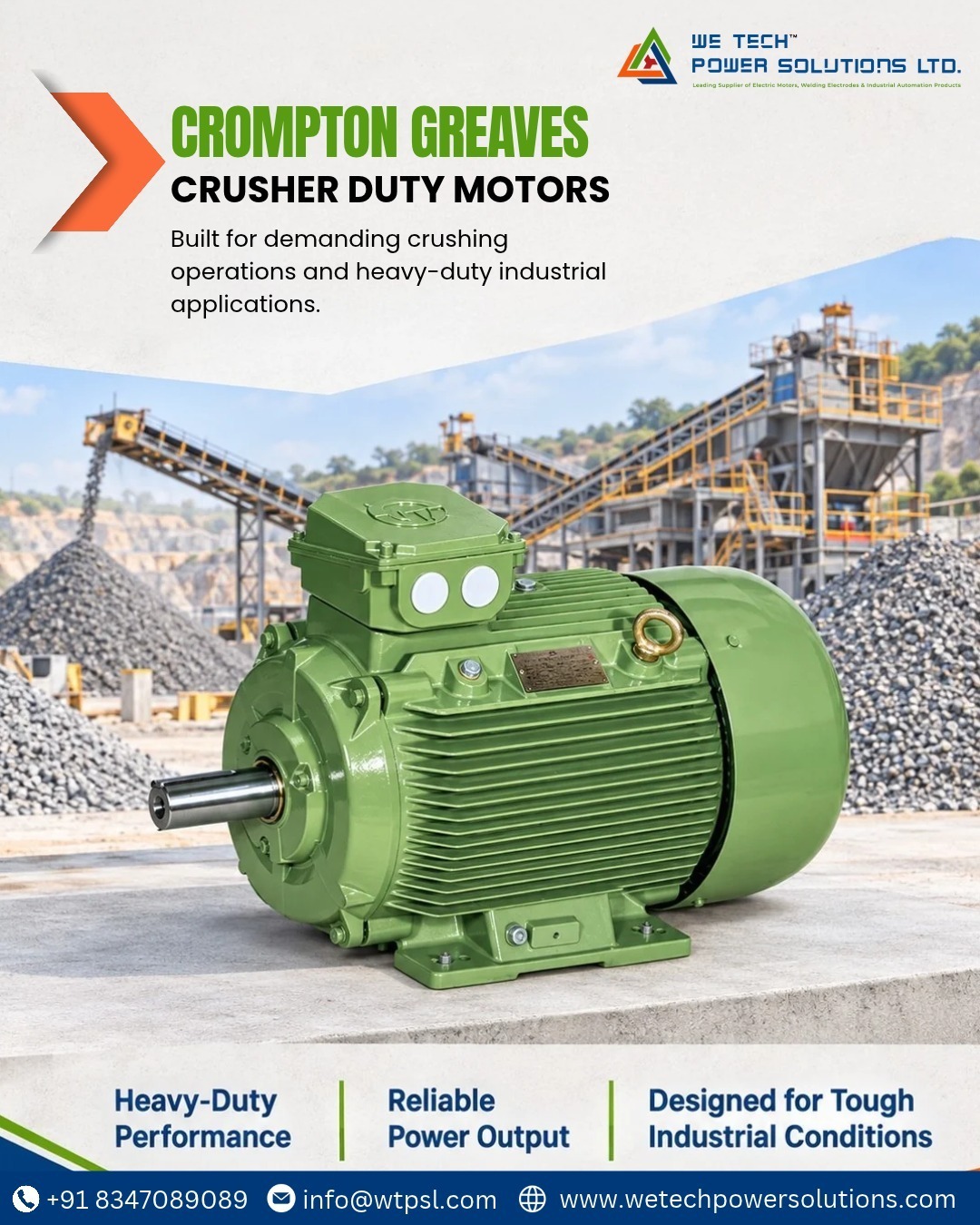
Crompton Greaves Crusher Duty Motors are designed for industrial applications that require dependable power for demanding machinery. Crusher duty motors drive equipment such as jaw crushers, cone crushers, impact crushers, and other machines used for material size reduction.
Choosing the right electric motor can improve equipment reliability, support production efficiency, and meet crushing plants' operational requirements.
Contact WeTech Power Solutions Ltd for industrial motor requirements and product-related inquiries. Buyers should confirm the exact motor model, manufacturer specifications, availability, and suitability before placing an order.
This article explains crusher duty motors, their key characteristics, industrial applications, benefits, and the factors to consider when selecting a motor for heavy-duty operations.
What Are Crompton Greaves Crusher Duty Motors?
Crompton Greaves Crusher Duty Motors refers to electric motors associated with the Crompton Greaves name and intended for suitable industrial drive applications, depending on the specific product model and manufacturer documentation.
A crusher duty motor converts electrical energy into mechanical power to operate crushing equipment. Select it based on the crusher’s power requirements, starting characteristics, operating load, installation environment, and duty cycle.
Crushing applications can place substantial demands on a motor because the material entering the crusher may vary in size, hardness, and quantity. The motor must be compatible with the driven machine’s mechanical characteristics and operating conditions.
When evaluating a Crompton Greaves motor, industrial buyers should verify the model number, rated output, speed, starting torque, enclosure, insulation system, and other technical specifications from the relevant product datasheet.
Why Are Crusher Duty Motors Important in Heavy-Duty Industries?
Crushing equipment is often critical to industrial production. If the motor cannot meet the required load or environmental conditions, it may overheat, draw excessive current, or shut down unexpectedly.
When correctly selected and installed, suitable heavy-duty industrial motors meet the electrical and mechanical requirements of crushing equipment.
1. Handling Demanding Starting Conditions
Depending on the crusher design, starting under load can require substantial torque. The motor’s starting characteristics must match the driven equipment and the selected starting method.
2. Supporting Continuous Operations
Some crushing plants operate for extended periods. The motor’s rated duty, cooling system, insulation, and operating conditions must suit the intended workload.
3. Managing Changing Mechanical Loads
Crushing loads may fluctuate according to the type, hardness, and quantity of material being processed. Correct motor sizing helps accommodate the expected load profile.
4. Supporting Equipment Reliability
A correctly selected and maintained motor can help reduce avoidable failures. Appropriate electrical protection, alignment, ventilation, vibration monitoring, and preventive maintenance are also important.
What Key Features Should You Evaluate in Crompton Greaves Crusher Duty Motors?
Crompton Greaves crusher duty motor specifications vary by model. The following characteristics should be evaluated before purchasing an industrial motor for a crushing application.
1. Rated Power Output
Motor power is commonly expressed in kilowatts (kW) or horsepower (HP). The rated output should meet the crusher manufacturer’s requirements under the expected operating conditions.
An undersized motor may struggle with the required load, while an unnecessarily oversized motor can increase initial costs and affect operating economics.
2. Starting Torque
Starting torque determines the motor’s ability to begin rotating the connected machinery. It is particularly important when a crusher must start against a substantial mechanical load.
Check the motor’s torque characteristics alongside the crusher’s starting requirements and starting method.
3. Operating Speed
The motor’s rated speed must be compatible with the crusher’s design. Depending on the installation, couplings, belt drives, gearboxes, or other transmission arrangements may be used.
4. Insulation System and Temperature Limits
The motor’s insulation system and permissible temperature rise should suit the electrical load and operating environment. Confirm the relevant insulation class and temperature limits in the technical documentation.
5. Enclosure and Ingress Protection
Crusher installations may expose motors to dust, vibration, and outdoor weather conditions. The enclosure and ingress protection rating should match the installation environment.
Appropriate ventilation and cleaning practices help maintain reliable operation.
6. Cooling Arrangement
The motor’s cooling system must be suitable for the intended duty. Maintain the required ventilation clearance and follow the manufacturer’s installation instructions.
7. Electrical Compatibility
Verify the motor’s rated voltage, frequency, phase, full-load current, and starting requirements against the available electrical supply and control system.
8. Mounting and Mechanical Compatibility
Check the mounting arrangement, shaft dimensions, frame size, coupling requirements, and available installation space to ensure compatibility with the driven equipment.
Where Are Crompton Greaves Crusher Duty Motors Used?
Crusher duty motors serve industries where crushing and material size reduction are essential production activities.
1. Mining Industry
Mining operations use crushers to reduce extracted rock and mineral material to manageable sizes. The motor supplies the mechanical power required to operate the crusher.
Motor selection depends on the crusher type, material characteristics, operating load, and site environment.
2. Cement Manufacturing
Cement plants use crushing equipment to process limestone and other raw materials. Suitable industrial motors support crushing operations during material preparation.
3. Stone Crushing Plants
Stone crushing facilities use jaw, cone, and impact crushers to produce aggregates for construction and infrastructure projects.
The motor must match the crusher’s power demand, starting requirements, and operating duty.
4. Mineral Processing
Mineral processing plants use crushers to prepare materials for subsequent screening, grinding, and separation operations. Motor reliability is important for maintaining production continuity.
5. Construction and Infrastructure
Aggregate production and material recycling operations require machinery that can process large quantities of stone, concrete, and other materials.
Suitable electric motors drive the equipment to meet its rated operating requirements.
6. Industrial Material Processing
Certain manufacturing facilities use crushing and size-reduction machinery to process raw materials, recycled products, and industrial waste. Motor selection should account for the specific machine and material being handled.
How Do You Choose the Right Electric Motor for a Crushing Plant?
Selecting the right Electric Motors for crushing plants means evaluating the entire drive system, not just choosing a motor based on horsepower.
Step 1: Identify the Crusher Type
Determine whether the application uses a jaw crusher, cone crusher, impact crusher, or another type of crushing machine. Each design has different operating and starting characteristics.
Step 2: Confirm the Power Requirement
Check the crusher manufacturer’s recommended motor rating and the expected operating load. Consider the machine’s duty cycle and production requirements.
Step 3: Evaluate Starting Conditions
Determine whether the crusher starts empty or under load. Verify the required starting torque and ensure that the selected motor and starter are compatible.
Step 4: Check the Electrical Supply
Confirm voltage, frequency, phase, available starting current, and protection requirements. Ensure compatibility with the site’s electrical infrastructure.
Step 5: Assess the Installation Environment
Consider dust, ambient temperature, humidity, altitude, ventilation, and outdoor exposure. Select an appropriate enclosure and cooling arrangement.
Step 6: Verify Mechanical Dimensions
Check shaft size, mounting dimensions, frame size, coupling arrangement, and alignment requirements.
Step 7: Review Technical Documentation
Request the manufacturer’s datasheet, applicable performance information, installation guidelines, and warranty details.
A complete evaluation helps ensure the selected motor meets the crushing equipment's requirements and operating environment.
What Are the Benefits of Choosing the Right Heavy Duty Industrial Motor?
A correctly specified industrial motor can support more reliable, efficient plant operations.
· Reliable Power Delivery: Supplies mechanical power according to the machine’s rated requirements.
· Operational Continuity: Appropriate sizing and maintenance can help reduce avoidable interruptions.
· Application Compatibility: Matches the crusher’s speed, torque, power, and starting requirements.
· Maintenance Planning: Monitoring and scheduled servicing help identify potential issues before they develop into major failures.
· Energy Management: Selecting an appropriate motor and operating it efficiently can support energy-cost management.
· Equipment Protection: Proper motor protection and coordinated drive-system design can help reduce the risk of electrical and mechanical damage.
Actual results depend on motor specifications, installation quality, operating conditions, and maintenance practices.
Why Choose We Tech Power Solutions Ltd for Industrial Motor Requirements?
Selecting an industrial motor supplier involves more than comparing product prices. Buyers should consider technical support, accurate specifications, product authenticity, availability, and after-sales service.
Contact Tech Power Solutions Ltd to discuss industrial motor requirements and product availability. Buyers interested in Crompton Greaves crusher duty motors should confirm the exact model, manufacturer specifications, rated output, operating speed, and application suitability before purchasing.
When comparing an Industrial Motor Supplier in India, consider the following factors:
· Availability of the required motor rating and configuration.
· Access to authentic manufacturer documentation.
· Assistance with technical specifications and motor selection.
· Clear information about delivery, warranty, and service support.
· Compatibility with the crusher and its electrical supply.
These checks help industrial buyers make informed purchasing decisions for mining, cement, aggregate, and other material-processing applications.
Frequently Asked Questions (FAQs)
1. What are Crompton Greaves Crusher Duty Motors used for?
They are used in electric motor applications for crushing equipment in industries such as mining, cement manufacturing, aggregate production, and mineral processing. Confirm the specific model’s intended application through manufacturer documentation.
2. What is a crusher duty motor?
A crusher duty motor is an electric motor selected to drive crushing machinery under its specified mechanical and electrical operating conditions.
3. How do I select the right motor for a crusher?
Consider the crusher type, required power, starting torque, speed, duty cycle, electrical supply, enclosure, cooling arrangement, and mechanical compatibility.
Keywords