Siemens Brake Motors: Features, Applications & Industrial Solutions
What Are Siemens Brake Motors and Why Are They Essential for Industrial Applications?
Modern industries depend on reliable machinery, precise motion control, and safe stopping. From conveyor systems and packaging machines to cranes, hoists, and automated production lines, controlled braking is essential for efficient industrial operations.
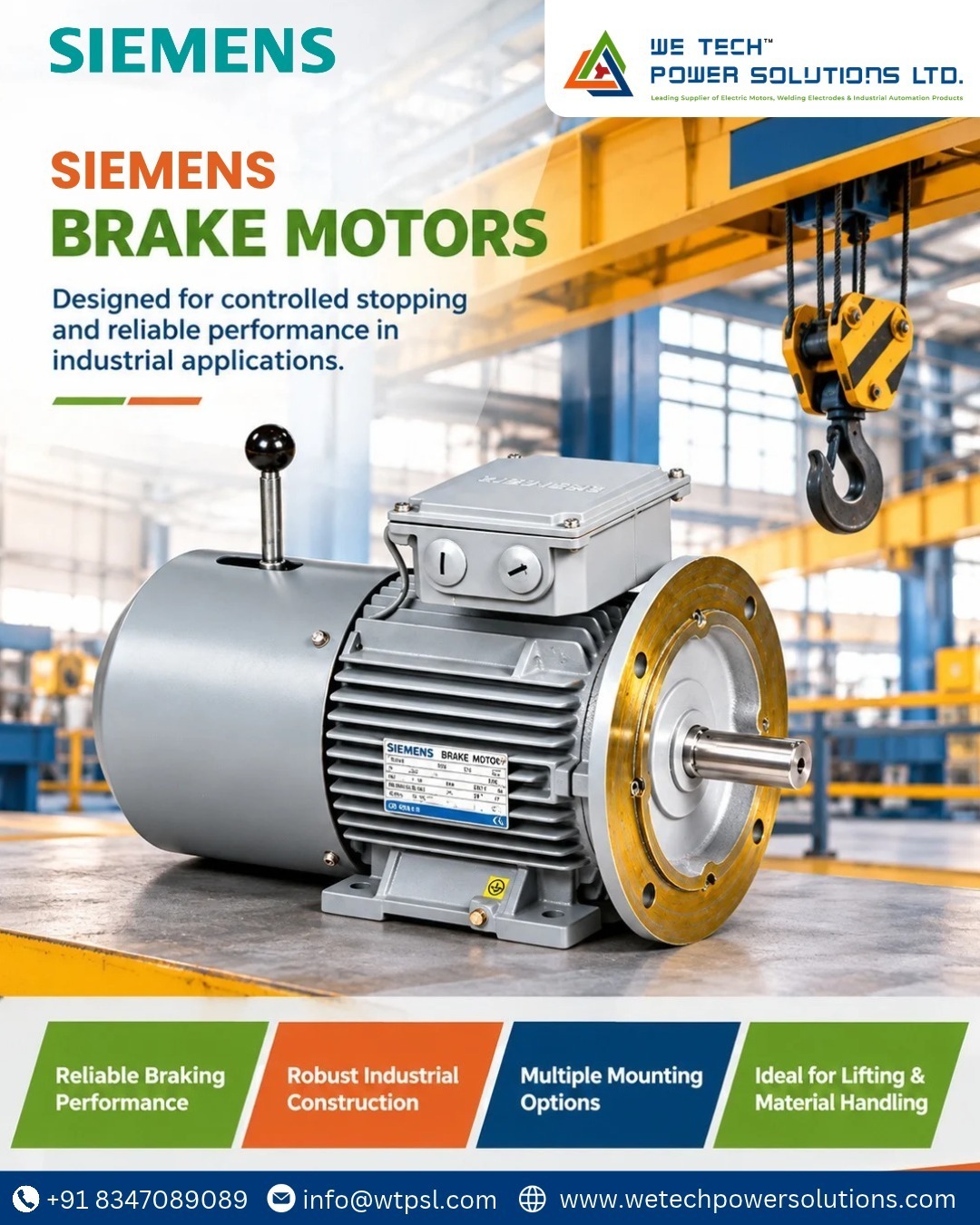
Siemens brake motors combine electric motor performance with an integrated braking mechanism to help control rotational movement and hold loads stationary in suitable applications. They are widely used in industrial operations where dependable stopping, positioning, and operational safety are important.
At We Tech Power Solutions Ltd., we support industrial motor requirements by helping businesses identify suitable motor solutions for their equipment and operating conditions. Whether you are upgrading existing machinery or planning a new installation, understanding Siemens brake motor specifications and applications can help you make an informed purchasing decision.
As an Industrial Brake Motor Supplier in India, we at Tech Power Solutions Ltd. help customers identify suitable solutions for industrial applications across India and Gulf markets.
What Are Siemens Brake Motors?
Siemens brake motors are electric motors with a braking mechanism designed to stop shaft rotation or hold a load in position, depending on the brake design and control arrangement.
A common configuration uses a spring-operated electromagnetic brake. Electromagnetic force releases the brake during operation, while spring force engages it when the brake supply is removed. This arrangement can help prevent unwanted movement when electrical power is interrupted.
The appropriate Siemens brake motor depends on several factors, including:
- Motor power rating and operating speed
- Required braking torque
- Mounting arrangement and shaft configuration
- Electrical supply and brake control requirements
- Starting and stopping frequency
- Environmental conditions and protection requirements
For lifting applications involving suspended loads, correct brake sizing and integration with the machine's safety systems are particularly important.
How Do Siemens Brake Motors Work?
The operating principle of a typical spring-operated electromagnetic brake motor involves the following steps:
- Motor starting: The control arrangement supplies power to the motor, releasing the brake.
- Brake release: Electromagnetic force overcomes the spring force, allowing the shaft to rotate.
- Motor operation: The motor drives connected equipment, such as a conveyor, hoist, packaging machine, or production mechanism.
- Brake engagement: When the brake is de-energised, spring force applies the brake.
- Stopping or load holding: The engaged brake helps stop or hold the shaft within its specified operating limits.
Actual stopping performance depends on load inertia, operating speed, brake characteristics, controls, and application conditions. A holding brake should not be assumed to replace a service brake designed for frequent dynamic stopping.
Key Benefits of Siemens Brake Motors for Industrial Applications
1. Improved Operational Safety
Industrial equipment often handles heavy materials or operates in environments where unintended movement can create hazards. A suitably selected brake motor can help prevent unwanted shaft rotation when electrical power is removed.
These characteristics are valuable in lifting equipment, hoists, and selected material-handling systems. The brake must be correctly sized and integrated with the machine's safety controls.
2. Reliable Stopping and Load Holding
Many industrial processes require machinery to stop at a defined position or remain stationary between operating cycles.
Siemens brake motors with appropriate braking specifications can support controlled stopping and load holding in applications such as conveyors, positioning systems, and lifting mechanisms.
3. Simplified Equipment Integration
Combining a motor and braking mechanism into one assembly can simplify installation compared with using separate motor and brake units.
Depending on the machine design, this arrangement can reduce mounting complexity, save installation space, and support a more compact equipment layout.
4. Support for Industrial Automation
Automated production lines require coordinated motor operation and repeatable stopping sequences.
When matched with compatible drives, sensors, and brake controls, suitable Siemens brake motors can support machine positioning, synchronised movement, and automated operating cycles.
5. Versatility Across Industrial Sectors
Brake motors serve a wide range of industrial applications, including material handling, packaging, manufacturing, textiles, and machinery that requires controlled stopping.
Choosing the right configuration matches the motor's performance and braking characteristics to the equipment's requirements.
6. Maintenance and Equipment Reliability
Regular inspection and maintenance help preserve braking performance and reduce the risk of unexpected downtime.
Depending on the model, maintenance may include checking brake wear, air-gap settings (where applicable), electrical connections, mounting, and stopping response. Always follow the manufacturer's instructions for the exact motor and brake configuration.
Common Applications of Siemens Brake Motors
Siemens brake motors suit machinery that requires controlled movement, stopping, or load holding.
Conveyor Systems
Help control conveyor movement during material transfer, sorting, packaging, and production operations.
Cranes and Hoists
Suitable configurations can support load holding and controlled stopping when selected for the required lifting duty and safety requirements.
Packaging Machinery
Help achieve controlled stopping during packaging, filling, sealing, and product-handling cycles.
Material-Handling Equipment
Support movement control in selected industrial handling systems, transfer equipment, and automated material transport applications.
Textile Machinery
Can be used in suitable textile equipment that requires controlled movement and stopping.
Machine Tools
Supports machinery that requires controlled shaft movement and repeatable stopping.
Automated Production Lines
Help coordinate stopping and positioning during suitable automated manufacturing processes.
For every application, evaluate motor power, braking torque, stopping frequency, load inertia, and safety requirements before choosing a motor.
Key Specifications to Consider When Selecting Siemens Brake Motors
Choosing the right Siemens brake motor requires more than matching the motor's power rating to the machine.
Motor Power and Speed
Determine the required output in kilowatts (kW), operating speed in revolutions per minute (RPM), and load characteristics. The motor must meet the application's starting, running, and acceleration requirements.
Braking Torque
Braking torque affects the brake's ability to stop or hold a load under specified conditions. Consider load inertia, shaft speed, external forces, required stopping time, and the manufacturer's operating limits.
Mounting Arrangement
Confirm whether the application requires foot mounting, flange mounting, or another compatible arrangement. Check shaft dimensions, mounting dimensions, and installation space.
Electrical Supply and Brake Control
Verify the motor's rated voltage, frequency, and phase, as well as the brake's supply voltage and control requirements. Motor and brake electrical arrangements may differ.
Duty Cycle
Evaluate how frequently the motor starts, stops, and operates under load. Applications involving frequent braking or high braking energy may require a brake rated for that specific duty.
Environmental Protection
Consider enclosure protection, ambient temperature, humidity, dust exposure, and other operating conditions. Select a configuration appropriate for the installation environment.
Siemens Brake Motors vs. Standard Electric Motors
Understanding the difference between brake motors and standard electric motors can help you select the right solution.
Braking mechanism
Includes a specified brake assembly
Usually requires a separate brake if braking is needed
Load holding
Available with suitable brake configurations
Depends on additional equipment
Installation
Can simplify motor-and-brake integration
May require additional components
Typical applications
Hoists, conveyors, positioning systems, and suitable machinery
Pumps, fans, and other machinery without an integrated holding-brake requirement
Selection criteria
Motor performance plus braking requirements
Motor performance and application requirements
The best choice depends on the equipment's operating cycle, braking needs, installation constraints, and safety requirements.
How to Choose a Reliable Siemens Brake Motor Supplier
Choosing a suitable supplier is an important part of sourcing industrial motors. Buyers should evaluate product suitability, technical documentation, traceability, and after-sales support before purchasing.
When selecting an Industrial Brake Motor Supplier in India, consider the following factors:
- Availability of genuine products and verifiable model information
- Access to relevant technical datasheets and manufacturer documentation
- Assistance with motor sizing and braking torque requirements
- Compatibility with existing industrial drives and control systems
- Availability of replacement parts and maintenance support
- Clear warranty conditions and after-sales service
- Communication and support for industrial procurement requirements
Contact Tech Power Solutions Ltd. to discuss your Siemens brake motor requirements and identify suitable options based on your application details and technical specifications.
Siemens Brake Motors India: Industrial Motor Solutions
Businesses sourcing Siemens Brake Motors India solutions should assess motor ratings, braking characteristics, installation requirements, and application compatibility before selecting a model.
For industrial buyers, providing complete technical information can help streamline product identification and procurement. Relevant details include motor power, speed, voltage, mounting arrangement, braking torque, and operating duty.
At Tech Power Solutions Ltd., we help customers discuss their industrial motor requirements and evaluate suitable configurations for their equipment.
Siemens Brake Motors Gulf: Solutions for Regional Industrial Requirements
Industrial facilities across Gulf markets rely on dependable motors for material handling, manufacturing, logistics, and equipment operation.
When sourcing Siemens Brake Motors Gulf solutions, buyers should verify model specifications, environmental suitability, electrical compatibility, and delivery requirements for the intended installation.
Businesses looking for a Brake Motor Supplier Oman or sourcing Industrial Motors Oman should confirm the motor's suitability for the local power supply and operating environment.
For applications involving conveyors, lifting equipment, and automated handling systems, evaluate Material Handling Motors Gulf requirements based on load characteristics, braking torque, duty cycle, and the machine's safety design.
Contact We Tech Power Solutions Ltd. to discuss your motor requirements, confirm the necessary technical details, and enquire about suitable supply options for your project.
Siemens Brake Motor Installation and Maintenance Tips
Correct installation and routine maintenance are essential for reliable motor and brake operation.
- Verify specifications: Check motor ratings, brake torque, supply voltage, mounting dimensions, and duty requirements.
- Follow wiring diagrams: Connect the motor and brake according to the applicable manufacturer's instructions.
- Check mechanical alignment: Ensure proper mounting and shaft alignment to minimise unnecessary mechanical stress.
- Inspect brake wear: Follow the specified inspection schedule and verify wear limits or air-gap settings where applicable.
- Monitor stopping performance: Investigate unusual noise, delayed brake engagement, slipping, or inconsistent stopping.
- Use qualified technicians: Ensure qualified personnel perform electrical work, brake adjustments, and safety-related testing.
- Follow manufacturer documentation: Use the correct technical datasheets, installation instructions, and maintenance guidance for the selected model.
Never rely solely on an integrated holding brake as the only safety measure for a hazardous suspended load. The complete machine may require additional protective measures.
Why Contact We Tech Power Solutions Ltd.?
Selecting an industrial motor involves balancing performance, compatibility, safety, and operating requirements.
We Tech Power Solutions Ltd. provides a point of contact for businesses evaluating Siemens brake motors and related industrial motor requirements. Sharing your application details helps us determine which specifications and configurations to consider before procurement.
When enquiring, provide:
- Required motor power and speed
- Rated voltage, frequency, and phase
- Required braking torque
- Mounting arrangement and shaft details
- Intended application and duty cycle
- Operating environment and delivery destination
These details help clarify the technical requirements for your application and support a more informed purchasing decision.
Looking for Siemens brake motors for your next industrial project? Contact We Tech Power Solutions Ltd. to discuss your requirements and enquire about suitable motor solutions.
Frequently Asked Questions About Siemens Brake Motors
1. What are Siemens brake motors used for?
Siemens brake motors are used in industrial machinery requiring controlled stopping or load holding. Common applications include conveyors, cranes, hoists, packaging machines, material-handling systems, and selected automated production lines.
2. How does a Siemens brake motor work?
A typical spring-operated electromagnetic brake releases when electromagnetic force is applied. When the brake supply is removed, spring force engages the brake to stop or hold the shaft, depending on the brake design and application.
3. What are the main benefits of Siemens brake motors?
Key benefits include integrated braking, load holding in suitable applications, simplified equipment integration, and support for controlled industrial operations.
Keywords