Force Cooling Motors: Benefits, Applications & VFD Compatibility
Industrial machinery often operates at different speeds to meet changing production requirements. However, when a conventional electric motor runs slowly, its shaft-mounted cooling fan slows, reducing airflow and increasing the risk of overheating.
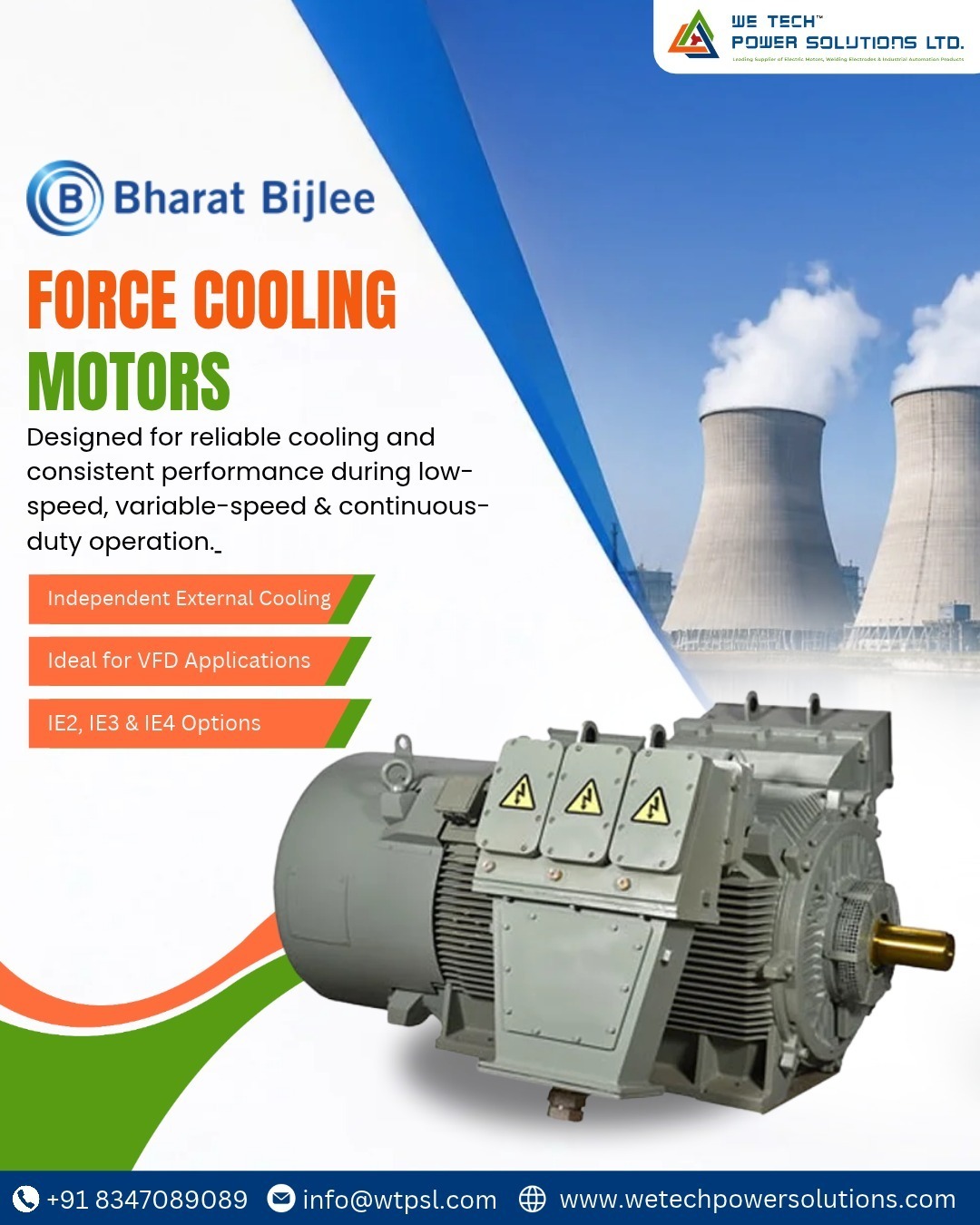
Force Cooling Motors address this challenge by using an independent external cooling fan to provide airflow even when the motor operates at low or variable speeds. They are especially useful for industrial applications that require speed control, consistent cooling, and reliable operation.
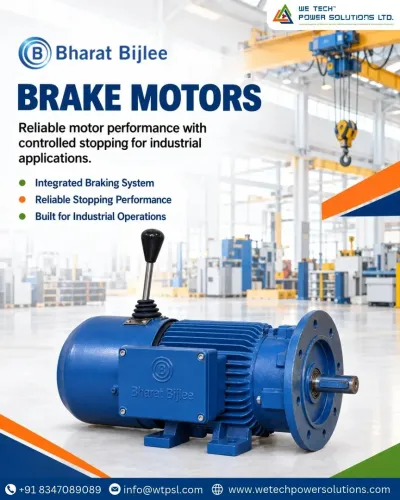
WE TECH Power Solutions Ltd. offers industrial motor solutions, including Bharat Bijlee motors, for applications that require dependable performance and effective thermal management. Businesses looking for Bharat Bijlee Motors can explore motor configurations that match their machinery and operating requirements.
What Are Force Cooling Motors?
Force cooling motors, also known as forced-ventilated motors, are electric motors with an independent cooling fan. Unlike conventional motors that generally depend on a fan mounted on the motor shaft, these motors use a separate fan to circulate cooling air.
This arrangement helps maintain effective heat dissipation at reduced speeds. A forced-cooling motor is especially beneficial in applications controlled by a variable frequency drive (VFD), where motor speed changes with process requirements.
Force-ventilated motors are commonly used in industrial machinery that requires independent cooling during variable-speed operation. The appropriate configuration depends on motor specifications, load conditions, and the operating environment.
Key Benefits of Force Cooling Motors
1. Consistent Cooling at Low Speeds
When a standard motor runs at reduced speed, its shaft-mounted fan typically produces less airflow. A force cooling motor uses an independent fan to provide cooling regardless of the motor's rotational speed, within the system's design limits.
This helps manage heat during low-speed operation and supports reliable motor performance when correctly selected.
2. Improved Compatibility With VFD Systems
Variable frequency drives let motors adjust speed to production requirements. However, reduced speed can affect a conventional motor's cooling performance.
VFD Cooling Motors with independent forced ventilation help address this limitation by maintaining cooling airflow across a suitable operating speed range.
3. Reliable Industrial Operation
Manufacturing equipment, conveyors, pumps, and automated machinery may require extended operating hours at different speeds. A properly specified industrial force cooling motor helps manage thermal conditions during demanding operations.
Actual performance depends on the motor rating, load, ambient temperature, ventilation arrangement, and duty cycle.
4. Support for Motor Service Life
Excessive operating temperatures can accelerate insulation aging and affect motor reliability. Effective forced ventilation helps control heat and, with appropriate maintenance and protection, supports the motor's expected service life.
5. Flexibility for Variable-Speed Applications
Force cooling motors support applications where motor speed must change without relying entirely on shaft-mounted cooling. This allows engineers to evaluate suitable motor and drive combinations for processes that require controlled speed and torque.
The independent fan also consumes electrical energy, so consider the efficiency of the complete motor and drive system during selection.
Applications of Industrial Electric Motors With Forced Cooling
The correct motor configuration depends on the application, load characteristics, torque requirements, operating speed, and environmental conditions.
How to Choose the Right Forced Cooling Motor
Before selecting a forced-cooling motor, consider the following factors:
1. Motor Power and Torque: Confirm that the motor meets the required output across the operating speed range.
2. VFD Compatibility: Check the manufacturer's specifications for inverter-fed operation.
3. Cooling Fan Configuration: Verify the fan's electrical supply, airflow requirements, and installation arrangement.
4. Operating Speed Range: Confirm the permitted minimum and maximum speeds.
5. Efficiency Rating: Evaluate available IE2, IE3, or IE4 options, where applicable.
6. Duty Cycle: Choose a motor suitable for the expected operating hours and load.
7. Thermal Protection: Consider temperature sensors and appropriate motor protection devices.
8. Maintenance Requirements: Review ventilation access, inspection intervals, and servicing needs.
Selecting the right motor helps support effective heat management, dependable operation, and compatibility with the intended industrial process.
Bharat Bijlee Motors for Industrial Applications
Bharat Bijlee motors are used in industrial applications where performance, electrical specifications, and application suitability are key considerations.
When evaluating Bharat Bijlee Motors for variable-speed machinery, businesses should verify the specific model's power rating, torque characteristics, insulation system, cooling arrangement, and compatibility with the selected drive.
Where forced cooling is required, confirm that the chosen motor configuration supports an independent cooling fan and the intended operating conditions.
Why Choose WE TECH Power Solutions Ltd.?
WE TECH Power Solutions Ltd. supplies electric motors and industrial automation products for a range of industrial requirements. Selecting the right motor involves evaluating performance specifications, cooling arrangements, drive compatibility, and operating conditions.
Businesses seeking Force Cooling Motors or other industrial motor solutions can contact WE TECH Power Solutions Ltd. for product information and assistance with identifying a suitable configuration.
Frequently Asked Questions (FAQs)
1. What are force cooling motors?
Force cooling motors use an independent cooling fan to circulate air separately from the motor shaft's rotational speed. This helps maintain cooling at reduced speeds.
2. Why are force cooling motors used with VFDs?
A variable frequency drive changes motor speed according to process requirements. At low speeds, a conventional shaft-mounted fan may provide insufficient airflow. Forced ventilation helps address this limitation.
3. Can a forced cooling motor operate continuously at low speed?
Yes, provided the motor is suitable for the required load, speed range, torque, and thermal conditions. Always check the manufacturer's operating limits.
Keywords